NEWS & ARCHIVES
The Systemic Architecture of Flourishing: Designing for Emergence
May 17 2026
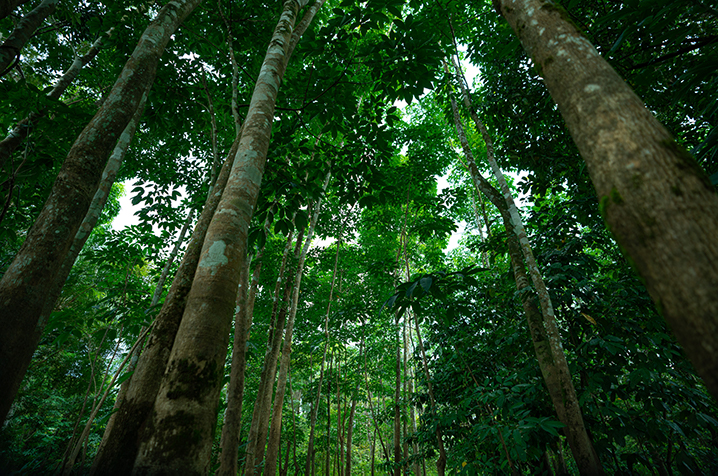
If we are to talk about human flourishing in a complex, vital landscape like Nigeria, we must entirely abandon the legacy, mid-century illusion of top-down statecraft and centralized administrative management. A society cannot be engineered into prosperity from a remote blueprint. The "forest" of a thriving nation is not an object to be administered; it is an emergent macro-property generated by the relational density of its micro-foundations.
When we look at a healthy forest, we are actually observing an intricate, distributed network of localized, high-agency micro-infrastructures—what we might poetically call "gardens."
The Micro-Infrastructure of Care
To build a resilient future, our focus must shift away from macro-political theater and toward the deep code of our everyday spaces. This requires a fundamental rethink across three systemic layers:
The Protocol of the Plot: These are the local cultural hubs, independent civic tech labs, and community-led regenerative spaces. They are not merely "projects"; they are primary sites of institutional innovation where new models of collective stewardship and everyday democracy are tested and proven.
The Invisible Mycelium (The Dark Matter): What connects these disparate gardens into a singular, resilient forest is the invisible relational infrastructure beneath the surface. It is the shared protocols of mutual reliance, peer-to-peer resource flows, and open-source knowledge transfers that allow a breakthrough in one local collective to instantly nourish a community hundreds of miles away.
Bioregional Sovereignty: A forest scales precisely because it does not demand uniformity. It thrives on a dense pluralism where different patches do entirely different structural work, rooted deeply in the specific ecological, economic, and cultural realities of their immediate soil.
The Boring Revolution of Tending Soil
Ultimately, systemic transition is a "boring revolution" of tending to the local soil right in front of us. We do not need to wait for permission from outdated, centralized systems to begin the architecture of a new reality.
By re-coding our immediate relationships, designing robust micro-infrastructures of care, and fiercely cultivating our local plots, we lay down the systemic scaffolding for a new continental narrative. The grand forest of shared Nigerian prosperity is not a top-down delivery; it is the inevitable, structural outcome of a thousand independent, healthy gardens realizing their radical interconnectedness and choosing to flourish together.
